


Patients with previously incurable cancer are seeing incredible results thanks to a pioneering new treatment that has just completed early trials. The world-first gene therapy is called BE-CAR7, and it’s being tested in children and adults with an aggressive form of leukemia.
The first patient to undergo the treatment was Alyssa Tapley, now aged 16. Tapley, from Leicester in the UK, was diagnosed with T-cell acute lymphoblastic leukemia in May 2021. Her cancer did not respond to the standard treatments of chemotherapy and bone marrow transplant, which is true for about 20 percent of children with this diagnosis. The family were essentially out of options when the clinical trial was proposed.
“I chose to take part in the research as I felt that, even if it didn’t work for me, it could help others,” Tapley said in a statement.
The BE-CAR7 treatment is a multi-step process developed by researchers at Great Ormond Street Hospital (GOSH) and University College London.
Healthy donor white blood cells are first modified to make them “universal” by removing surface receptors and nullified by removing an immune marker called CD7. This prevents the recipient’s immune system from simply destroying the new cells.
Another surface protein called CD52 is then removed. This hides the donor cells from the powerful immune-suppressing drugs that are given to the patient.
Finally, a new DNA sequence is added to the cells via a modified virus, which allows the cells to produce the chimeric antigen receptor (CAR). This is the secret weapon that allows the donor cells to target cancerous T-cells inside the patient’s body. CAR-T cell treatments have been particularly promising for blood cancers.
These perfectly engineered cells are then given to the patient, where they will hopefully go to town on the cancer cells and destroy them. The ideal timeline is four weeks, after which the patient can then receive a bone marrow transplant to rebuild their own immune system.
In Tapley’s case, it worked. She first shared her story back in 2022, but since then her cancer has remained undetectable and she’s been able to get back to enjoying life.
“I’ve gone sailing, spent time away from home doing my Duke of Edinburgh Award but even just going to school is something I dreamed of when I was ill. I’m not taking anything for granted. Next on my list is learning to drive, but my ultimate goal is to become a research scientist and be part of the next big discovery that can help people like me.”
“Seeing Alyssa go from strength-to-strength is incredible and a testament to her tenacity and the dedication of an array of small army of people at GOSH,” added investigator and bone marrow transplant consultant Dr Rob Chiesa.
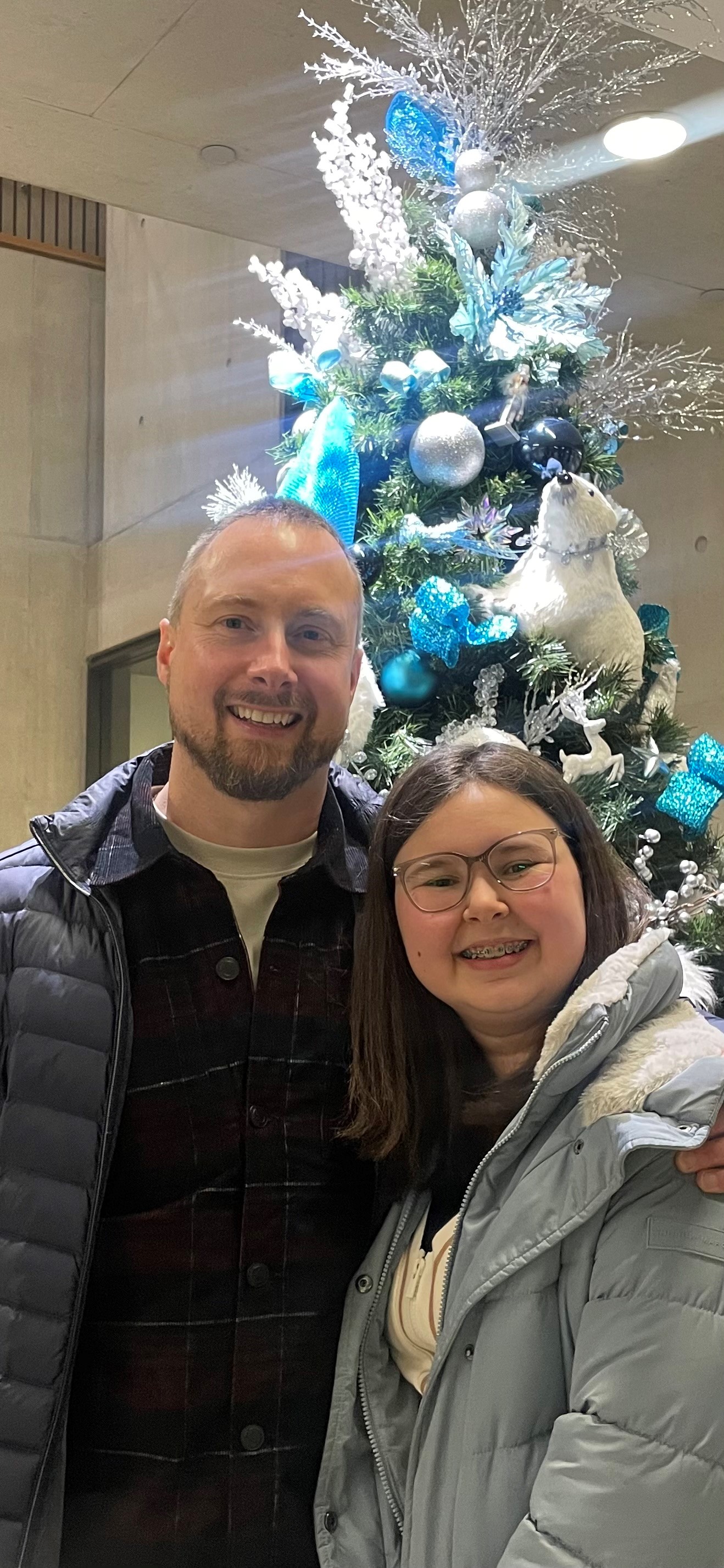
Alyssa Tapley with her father, James.
Image credit: courtesy of Alyssa’s family
Now, in a new paper and presentation at the 67th American Society of Hematology Annual Meeting, the team is reporting the results of a phase 1 trial of BE-CAR7 in eight children and two adults. The results were once again promising: 82 percent of the patients achieved “very deep remissions” and were able to proceed to the bone marrow transplant, and 64 percent of them are still disease-free, some of them for three years at this point.
It’s important to note that not all the patients originally recruited into the trial survived the treatment. There are side effects and it takes a long time for a person’s immune system to rebuild after a bone marrow transplant, during which extreme care must be taken to avoid infection.
“These are intense and difficult treatments – patients and families have been generous in recognising the importance of learning as much as possible from each experience,” said lead researcher Professor Waseem Qasim.
But for a cancer this rare and aggressive, the team says this treatment offers hope where none really existed before.
“We’ve seen impressive responses in clearing leukaemia that seemed incurable – it’s a very powerful approach,” said consultant hematologist Dr Deborah Yallop.
Immunotherapies like CAR-T cell therapy have been revolutionary in cancer treatment in recent decades. Given the success of this trial, charitable funding has been made available to support treatment of a further 10 patients.
In a comment to the Science Media Centre, Dr Tania Dexter, senior medical officer at UK stem cell charity Anthony Nolan – which IFLScience visited last year – reacted to the news.
“The results of the study are promising, with most patients achieving levels of remission allowing them to receive a stem cell transplant. Considering these patients had a low chance of survival before the trial, these results bring hope that treatments like this will continue to advance and become available to more patients.”
The study is published in the New England Journal of Medicine.