



Image source: Getty Images
Stock market crashes are inevitable. And it’s basically impossible to predict when the next one is coming.
The best thing to do is to be prepared. And the latest Guide to the Markets from JP Morgan has some useful advice for doing this.
Staying the course
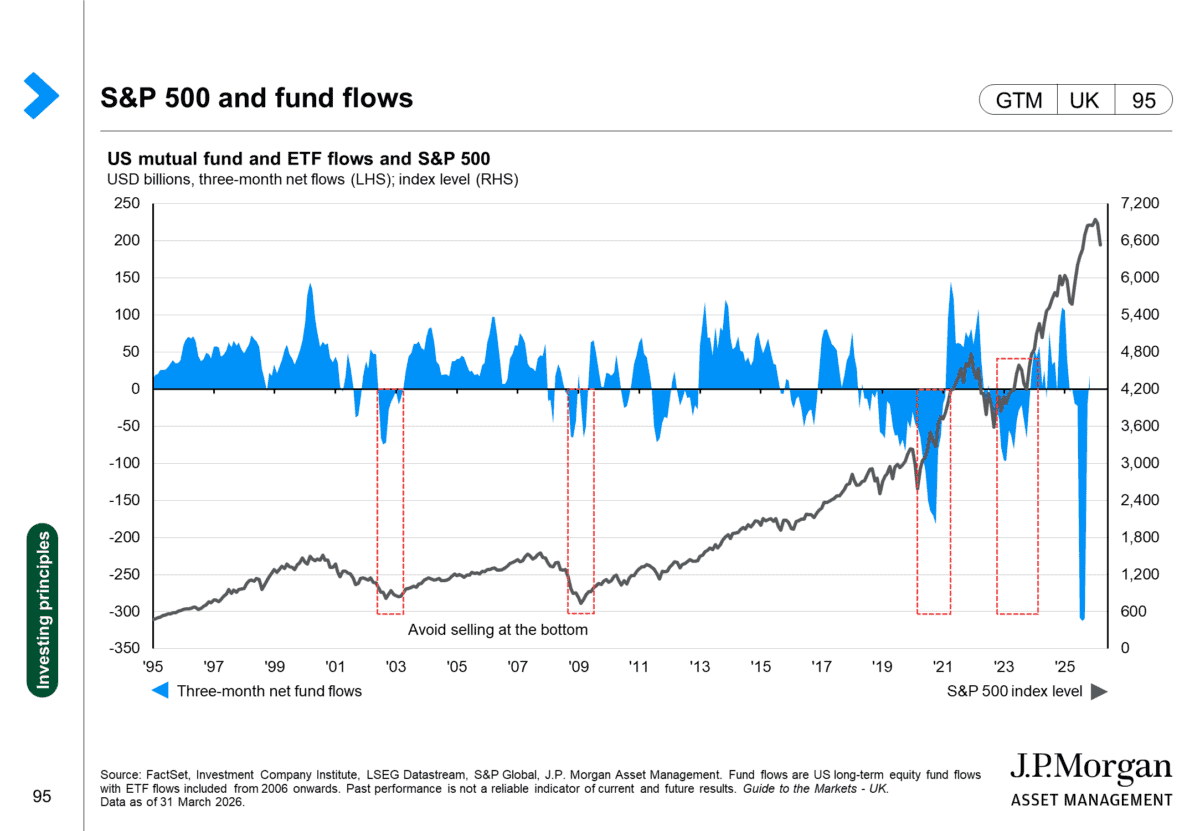
The way to lose money in a stock market crash is to sell when prices are low. It sounds obvious, but it’s more common than you might think.
Source: JP Morgan Guide to the Markets UK Q2 2026
Downturns in the stock market typically coincide with heavy selling from funds. So just avoiding this is actually a big advantage.
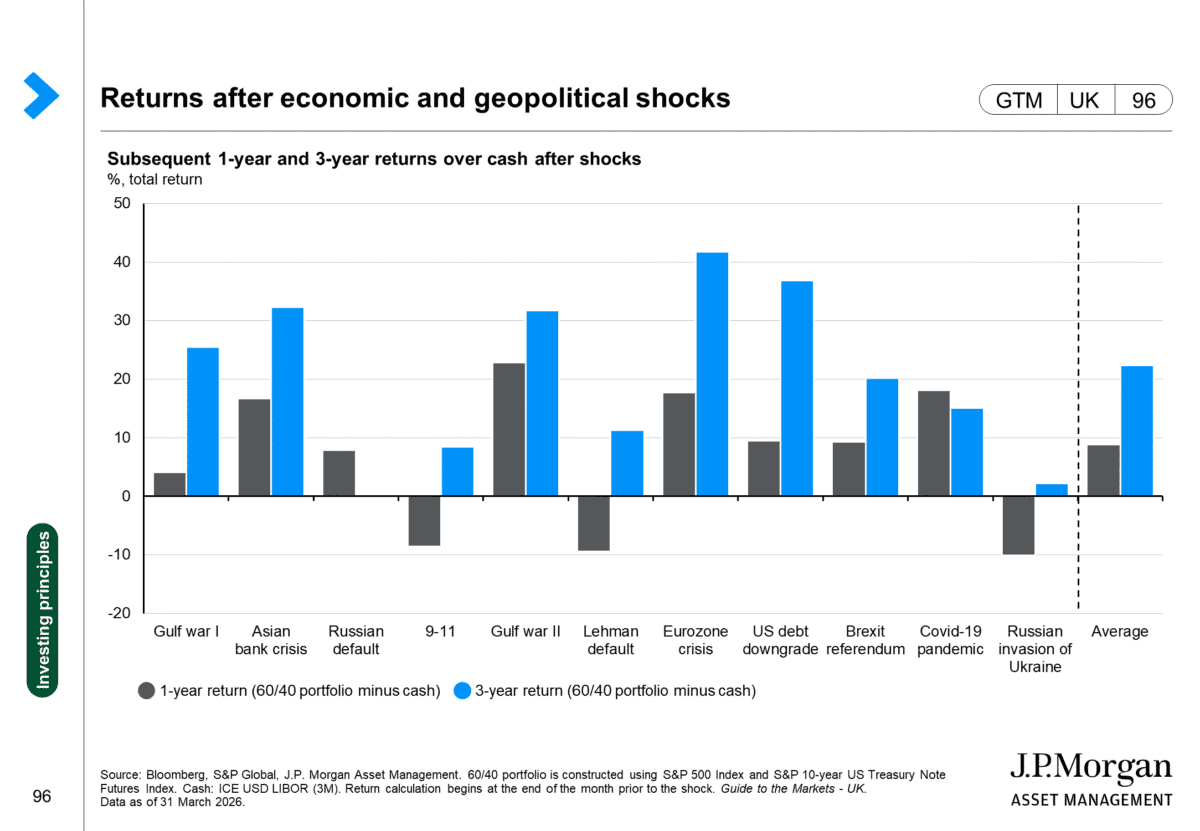
Selling during a downturn doesn’t just realise losses. It also leads to missing out on subsequent returns.
Source: JP Morgan Guide to the Markets UK Q2 2026
While one-year returns vary, the long-term picture is clear. Lower valuations – such as during a crash – lead to higher returns.
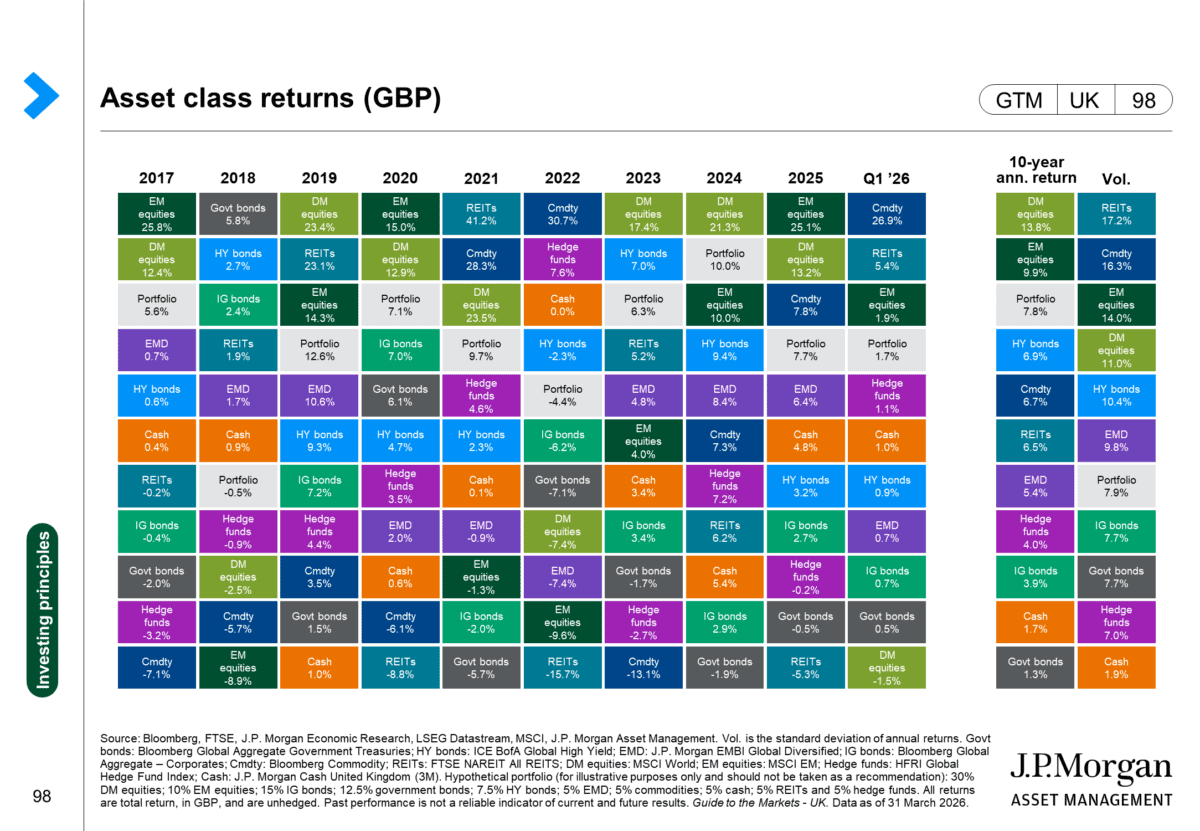
Investors shouldn’t take the prospect of a crash lightly. But despite the volatility, stocks do tend to outperform over time.
Source: JP Morgan Guide to the Markets UK Q2 2026
Selling in a crash feels like the natural thing to do. From a long-term perspective, though, holding cash hasn’t been a winning strategy.
Antifragility
I think the case against selling in crash is clear. But investors need to make sure they’re ready to deal with one when it comes.
This involves thinking about portfolio construction. And one idea is to include shares in companies that are antifragile.
That means they get stronger when things get tough. In the context of geopolitical shocks, defence stocks can fit the bill. The obvious name frome the FTSE 100 is BAE Systems. Demand for the firm’s products tend to be higher in times of conflict.
The downside is that growth prospects can be limited in normal times. Between 2016 and 2022, the firm’s revenues grew 3% a year.
There is, however, another name that I think is worth considering. It’s much smaller, but that doesn’t make it any less interesting.
Small-cap defence
Cohort (LSE:CHRT) is a supplier of defence systems. It doesn’t make planes or submarines, but it makes the tech that goes into them.
The company is much smaller than BAE Systems. And that means there’s a risk of losing key personnel to more lucrative posts elsewhere.
Despite this, the stock is up 39% since the start of the year. But its growth prospects don’t just depend on conflicts lasting longer than people might hope.
Cohort looks to use acquisitions to boost its growth. This can be risky, but it has a good reputation for doing this well. New subsidiaries benefit from the firm’s financial backing. But a decentralised approach allows them to operate autonomously.
That’s a business model I like a lot. And that’s why I’m keeping it on my radar for when the geopolitical situation becomes a bit more stable.
Investing success
The best investors don’t succeed by getting out of the way of stock market crashes. They do well by going through them.
Most of all that means avoiding selling when prices are low. It’s not just the cost of realising losses that makes this important. The missed future returns are also huge. And this means investors can get a huge advantage just by staying the course.