


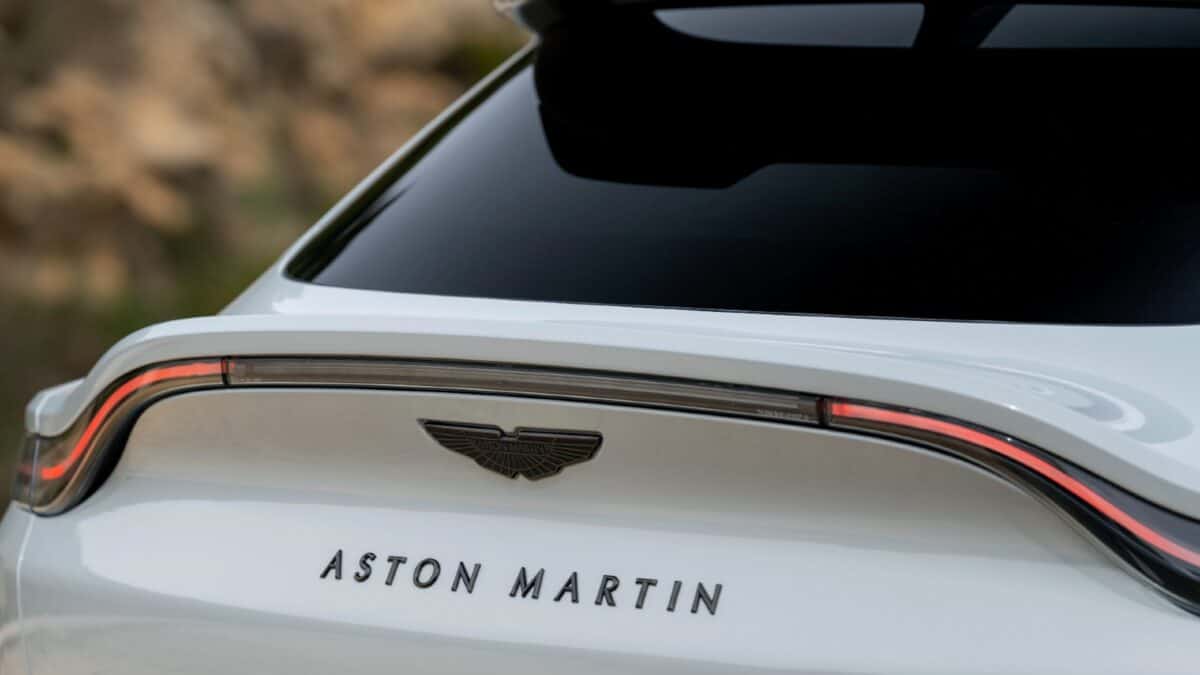
Image source: Aston Martin
Aston Martin (LSE: AML) shares have been a poor investment. While other FTSE shares have risen in 2026, the luxury carmaker’s share price has slumped.
How bad an investment are we talking? Well, here’s a look at how much £5,000 invested in the company at the start of the year is now worth.
The share price is stuck in reverse
On the first trading day of 2026 (2 January), Aston Martin shares ended the day at 64.55p. So let’s say that an investor put £5,000 into the automaker at that price. Today, that £5,000 would now be worth about £2,900, because the share price is currently 37.4p – about 42% lower than the closing price on 2 January.
Problems under the hood
What’s gone wrong in 2026? Well, for a start, results for 2025 were terrible. For the year, revenue was down 21% year on year to £1,258m, while operating losses blew out to £259.2m from £99.5m a year earlier.
One factor behind the poor performance in 2025 was “extremely subdued” demand in China. Another was US tariffs.
“An unprecedented backdrop of geopolitical uncertainties and macroeconomic pressures, including heightened tariffs in the US and China, weighed on our performance and ability to execute our plans effectively.”
Aston Martin CEO Adrian Hallmark
Economic uncertainty’s clouded the horizon
Recent market volatility (the result of economic uncertainty) hasn’t helped the stock. In a volatile market, investors tend to gravitate towards stable blue-chip companies that are consistently profitable and have strong balance sheets.
Aston Martin is about as far away from that kind of stock as it gets. Its balance sheet is loaded with net debt ( £1.4bn at the end of 2025) and the last time it generated a profit was 2017.
Could the stock do a Rolls-Royce?
Is there potential for a Rolls-Royce-like turnaround here? Well, never say never.
In the company’s 2025 results, CEO Adrian Hallmark said that he remains confident that the company’s strategy and upcoming products will position it for future success. He added that it expects to deliver a “material improvement” in financial performance in 2026 and continue delivering year-on-year improvements over the short to medium term with a focus on margin expansion and cash flow generation.
If the company was able to fix its profitability and balance sheet problems, it could potentially see strong share price gains. After all, the share price has fallen about 99% from its highs and today the company’s price-to-sales ratio today is just 0.3 versus 9.5 for rival Ferrari.
I won’t be buying the shares however. For me, they’re too risky given the lack of profitability and high amount of debt. Right now, I’m seeing more attractive opportunities elsewhere in the market.