


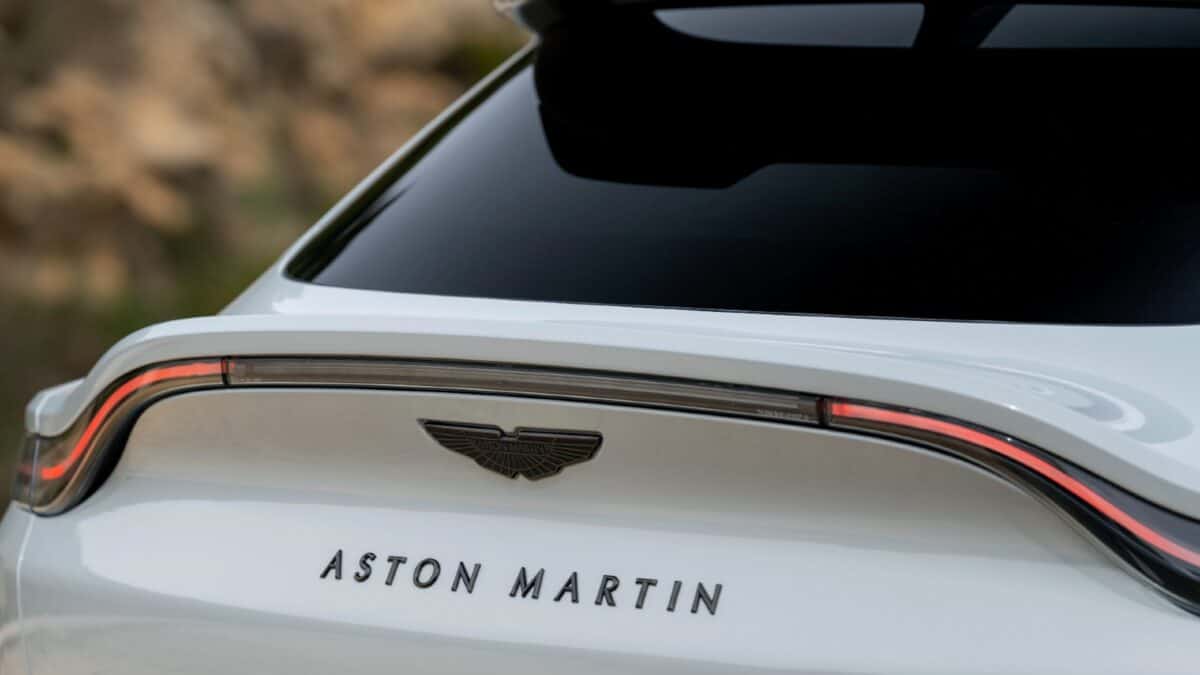
Image source: Aston Martin
Its cars are able to accelerate at high speed. The same is true when it comes to the Aston Martin (LSE: AML) share price. Unfortunately, it’s often been in the wrong direction since listing on the stock market in 2018.
In eight years, the Aston Martin share price has lost 99% of its value. Yesterday (26 March) saw it hit an all-time low.
This has been a long-term disaster, and recent results only compound the company’s problems. The share is down 43% since the turn of 2026 alone.
Here are five lessons I think every investor can learn.
A business with great assets isn’t necessarily a great investment
Aston Martin’s storied brand is unique. It has a well-heeled, deep-pocketed customer base and sells its cars at a high price. But that has not been enough to save the share price. The business model is still unproven, as the business remains lossmaking.
Even if the company made money, that would not necessarily mean it makes a good investment. Any investment involves looking at what you are buying – but also the price you pay for it.
Plans are great… but they’re only plans
Aston Martin has spent years talking about its goals for increasing sales, improving profitability and turning cash flow positive.
Investing in shares always involves making a judgement about how a business may perform in future, and that is true for Aston Martin. But some of the company’s goals over the past few years have looked increasingly improbable to me, based on how the company was performing.
When a business publicises its plans, it can be helpful to compare progress to the goal. When they seem to be far apart, is there some stepchange that could still make them credible, or not?
Expect the unexpected
Some of Aston Martin’s underperformance has been a result of its own strategic choices. But it has also been buffeted by external factors it may well never have been able to foresee, from the pandemic affecting factory operation to the impact of US tariffs.
The specific nature of those risks may have been a surprise, but the existence of some risks is not. All companies face risks and it is important when investing to build in what legend Warren Buffett calls a “margin of safety“.
Look at the balance sheet… every time
In its most recent quarter, Aston Martin actually generated free cash flows. It now aims to deliver positive free cash flow generation in “the coming years”.
That is just a target – and one whose timeline has been pushed back. But why are investors pricing the company so low if it is aiming to be cash flow positive?
A look at the balance sheet shows the answer. The firm has £1.4bn of net debt. Even if it turns an operating profit, servicing that debt could mean it still makes a hefty after-tax loss.
A low price can always move lower still
Some investors have bought Aston Martin shares because they think that, as the price has already gone so far down, it is unlikely to lose much more value.
That is a classic investing mistake. No matter how much a share has fallen (above zero), it can always still fall more.