


There he goes — Jared Leto, climbing another impossible surface, slowly but surely making his way to the top. Hanging on for dear life, making it all look cool, effortless, very Jared Leto. And then he fell.
The real fall didn’t happen on a mountain or the side of a skyscraper. It happened at the top of the entertainment industry, where he slipped, tumbled, and splattered across the sidewalks of Hollyweird, leaving behind a sparkly trail of scandal, controversy, confusion, and box office disasters.
Leto now lives in a former military compound — a place that once produced Cold War propaganda and, depending on who you ask, maybe even staged the moon landing in what is now his living room. Even he admits the property once held laboratories and a basement that used to be a military prison. His own description: “They were doing all kinds of God-knows-what.”
This is the contradiction of Jared Leto. He’s an Oscar-winning method actor, a touring rock star, a fashion alien, a man who might be running a desert cult, and box office poison. Few actors swing harder between “brilliant performance” and “cinematic disaster,” sometimes within the same decade — occasionally within the same year.
So what the f*** happened to Jared Leto?

To answer that, we start at the beginning — which began, as beginnings do, when he was born in 1971 in Louisiana.
His first major break came on the ’90s teen drama My So-Called Life, where he played a brooding, soft-spoken heartthrob who somehow stole the show by barely speaking. Teen audiences fell in love with him. Hollywood took notice. Leto became “the beautiful mysterious one” practically overnight.
Then came the explosive film roles: Fight Club, American Psycho, Requiem for a Dream. These weren’t normal assignments. They were extreme, psychologically twisted characters that required full physical and emotional transformation. Weight changes. Voice changes. Disappearing into the roles. Hollywood found its new “actor who goes too far,” and for a while, the intensity felt thrilling. Admirable, even.
Leto continued chasing strange, challenging roles with acclaimed directors — Panic Room, Alexander, Lord of War.
But Chapter 27 is where things went sideways.
To play John Lennon’s killer, he reportedly gained nearly 70 pounds by force-feeding himself microwaved pints of ice cream mixed with olive oil. The transformation was so extreme he developed gout and needed a wheelchair on set.
And for what? A movie almost nobody saw about a man nobody wanted to follow. This was the moment Hollywood realized Leto’s commitment wasn’t just intense — it was dangerous.
Then came Mr. Nobody, a surreal multiverse drama where he proved he could be mesmerizing without destroying his body. It should’ve been a turning point.
At the same time, his band Thirty Seconds to Mars exploded globally. Suddenly Leto wasn’t just a movie star — he was a touring rock god packing stadiums.
Fans followed him with cult-like enthusiasm. Quite literally. Leto hosted desert retreats where attendees wore white and listened to him speak like a messiah. He even posted a photo captioned: “Yes, this is a cult.”
A joke. Probably. Maybe. Possibly not.
This was the era of Leto transforming from actor to mystic guru to self-created prophet — a brand evolution only Jared Leto would attempt.

His performance in Dallas Buyers Club was the apex — heartbreaking, immersive, Oscar-winning. This should’ve launched a refined, mature chapter of his career.
Instead, it became the calm before the storm.
Then came Suicide Squad and Leto’s infamous Joker. Determined to craft “the most unique Joker ever,” he stayed in character 24/7. Strange voices. Odd behaviors. Sending his co-stars used condoms, bullets, a dead pig, and even a live rat.
Even by Hollywood standards, this was next-level weird.
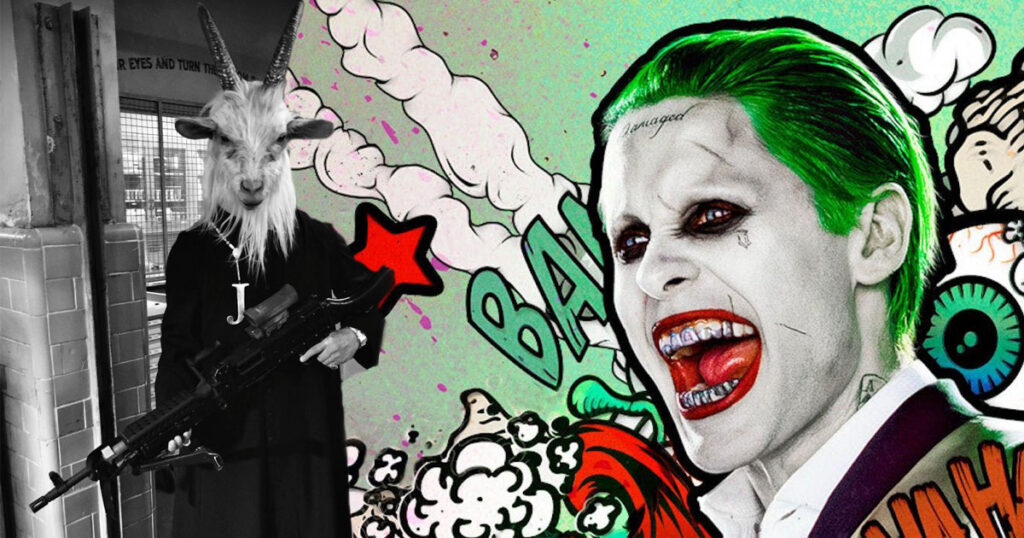
And then Warner Bros. cut almost all his scenes.
Imagine terrorizing your coworkers for months… for eight minutes of screentime. It didn’t just reshape his image — it redefined it. Leto was no longer the respected chameleon. He became the unpredictable eccentric who pushed method acting into the realm of performance art nobody requested.
His public image drifted into experimental fashion, strange interviews, and roles where the “weirdness” felt more calculated than organic. Blade Runner 2049 showed flashes of brilliance, but even there, the performance carried the unmistakable scent of trying too hard.
Authentic weirdness works. Forced weirdness? Painful.
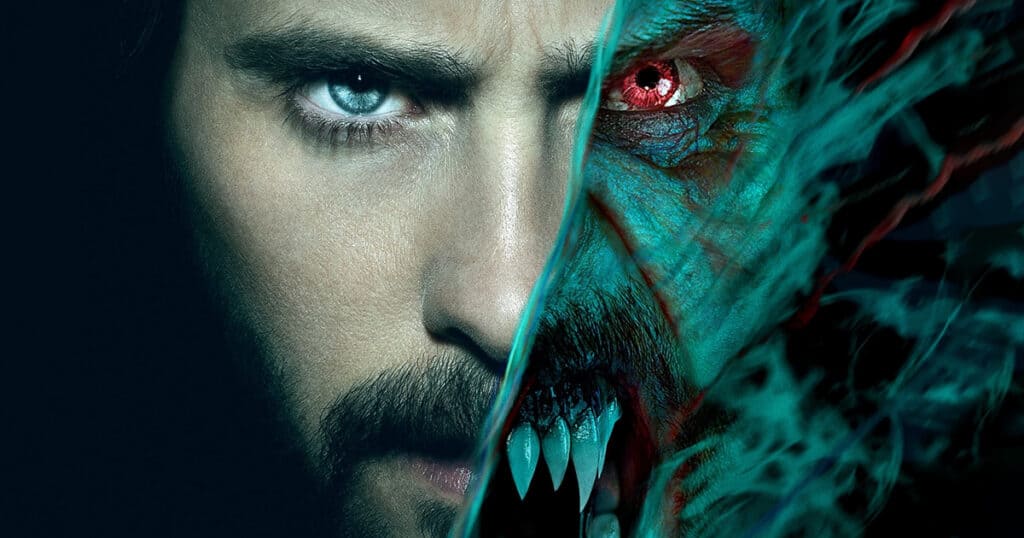
Morbius was the perfect storm. Reports claimed he refused to break character, staying “in vampire mode” even during bathroom trips, slowing production so much they gave him a wheelchair just to keep filming.
The film bombed. The internet turned it into a meme. “It’s Morbin’ Time” became a viral joke. Sony misunderstood the meme and re-released the movie.
It failed again.
Morbius became the first film in history to bomb twice.

Hollywood still loves a comeback story, so Disney took a chance. Enter a flashy Tron reboot starring Jared Leto, hyped for years as the return of the franchise.
Instead… it flopped. The visuals underwhelmed, the story faltered, and Leto’s performance drifted into the uncanny valley between “Is this acting?” and “Is this just Jared now?” Critics panned it. Fans shrugged. Disney quietly moved on.
And behind the scenes, something more serious was brewing.
In 2025, a major exposé revealed nine women had come forward accusing Leto of sexual misconduct — with some allegations involving minors. Accusations ranged from inappropriate conversations with girls as young as sixteen to indecent exposure.
Leto’s representatives denied all allegations, calling them “demonstrably false” and stating the communications “contained nothing sexual or inappropriate.” But the volume, consistency, and severity of the claims — especially those involving minors — have raised significant concern.
The cult rumors.
The method-acting horror stories.
The desert retreats.
The skyscraper climbing.
The Oscar win followed by Morbius and a failed Tron reboot.
Is Jared Leto a misunderstood genius?
A self-created myth?
A man addicted to transformation?
Or someone who no longer knows where the performance ends and the person begins?
In the end, Jared Leto remains a paradox — capable of incredible artistry and unbelievable misfires. A rock star, a prophet, an enigma, a walking publicity storm… and possibly something far darker.
Whatever the truth is, Hollywood has rarely seen a rise, fall, and reinvention quite like his.